


EHEA Work Programme Overview
Structure, Goals & Implementation
According to the EHEA Rules of Procedure, between Ministerial Conferences, the Bologna Follow-up Group (BFUG), where all members and consultative members are represented, develops, adopts and implements the work programme of the EHEA, in accordance with the priorities set by the ministers of higher education. The BFUG decides on the organisation of its work, in order to implement the work programme, including by setting up working structures. The work programme is completed by the following Ministerial Conference, and the BFUG reports to Ministers on its implementation. It may entrust the implementation of parts of the work programme to Working Groups and similar structures, the terms of reference of which are adopted by the BFUG. All working structures report and submit their proposals to the BFUG, in line with the schedule of the work programme. During the XCIII Bologna Follow-Up Group (BFUG) meeting, hosted by Hungary in September 2024, in Budapest, the Work Plan for 2024-2027 was adopted by the BFUG members. The Work Programme includes the following working structures: Working Group on Monitoring, Working Group on Fundamental Values, Working Group on Internationalisation and Mobility, Coordination Group on Global Policy Dialogue, Task Force on the Future of Bologna, Task Force on establishing a long-term Secretariat, Bologna Coordination Implementation Group and four Thematic Peer Groups, on qualifications, recognition, quality assurance and social dimension. A dedicated structure chaired by the European Commission will prepare a revision of the ECTS Users' Guide.
The BFUG adopted the Terms of Reference for the working structures through online procedure in January-February 2025:
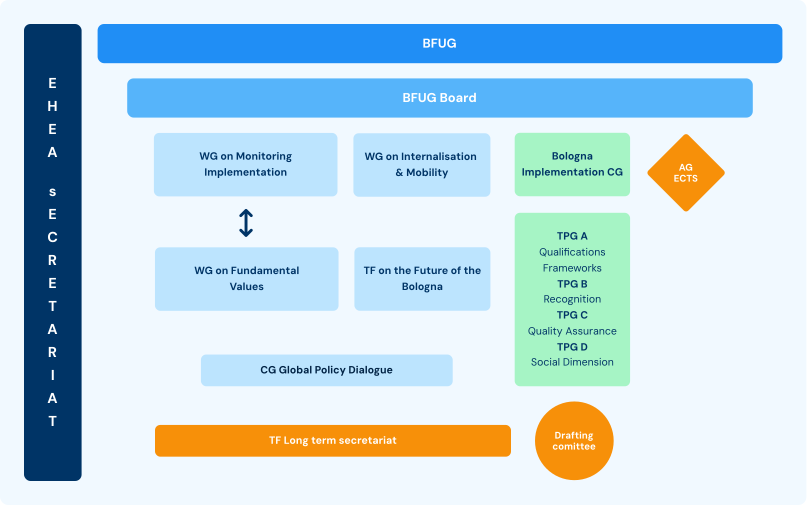
Working Structures 2024-2027
Working Group on Monitoring the Implementation of the Bologna Process

Working group on Fundamental Values
Working Group on Internationalisation and Mobility
Coordination Group on Global Policy Dialogue
Advisory Group on ECTS User’s Guide revision
Bologna Implementation Coordination Group
Thematic Peer Group A on Qualifications Framework
Thematic Peer Group B on the Lisbon Recognition Convention (TPG B on LRC)
Thematic Peer Group C on Quality Assurance
Thematic Peer Group D on Social Dimension (TPG D on SD)
Task Force on the Future of Bologna
Task Force on establishing a long-term Secretariat