

Launched in June 2025, the Support for the enhancement-oriented implementation of the quality assurance key commitment – SIQA project supports the work of the Bologna Thematic Peer Group C on Quality Assurance (TPG C on QA) during 2025-2028, building on the achievements and best practices from the IMINQA project (2022-2025).
The project focuses on providing structured support to TPG C members, through a collaborative approach, in addressing the remaining implementation gaps in EHEA countries for achieving the key commitment of “promoting a quality culture in higher education, fostered by fit-for-purpose quality assurance processes in line with the Standards and Guidelines for Quality Assurance in the EHEA (ESG)”. The project It also contributes to the fulfilment of other QA-related commitments, including the implementation of cross-border quality assurance (CBQA) and the use of the European Approach for Quality Assurance of Joint Programmes (EA).
Coordinator: ARACIS – Romanian Agency for Quality Assurance in Higher Education
Partners:
- ANQA – National Center for Professional Education Quality Assurance Foundation (Armenia)
- CTI – Commission des Titres d’Ingénieur (France)
- HCERES – Haut Conseil de l’Évaluation de la Recherche et de l’Enseignement Supérieur (France)
- EQAR – European Quality Assurance Register for Higher Education (Belgium)
- ENQA – European Association for Quality Assurance in Higher Education (Belgium)
Main objectives
SIQA aims to strengthen the consistency, cooperation, and mutual trust that underpin QA in the EHEA. Its specific objectives are:
- Organisation of thematic peer-support activities and transnational dialogue and exchange, within six TPG C members meetings.
- Support the TPG C members in fostering the implementation of the ESG through thematic analyses and by discussing the 2027 version of the ESGs and EA, including through a dedicated Conference.
- Exchange best practices, foster transnational dialogue, and stimulate peer learning and mutual understanding among EHEA countries, in the field of quality assurance, through staff mobility among TPG C members.
- Advance the work of national authorities and QA agencies in meeting Bologna Process commitments on the international dimension of QA by further addressing the implementation of the European Approach for Quality Assurance of Joint Programmes (EA), facilitating and enhancing the implementation of CBQA, and exploring approaches to QA of transnational education.
- Explore innovative directions in external QA by mapping QA processes for flexible learning pathways, reflecting on QA needs related to European Universities Alliances, and supporting a renewed, less burdensome quality culture that enables innovation and addresses emerging expectations in higher education.
Key outcomes and expected results:
By 2028, SIQA will deliver:
- Outputs supporting the work of TPG C, including thematic materials and consolidated findings emerging from the meetings held during the project period;
- Insights gained through the Staff Mobility Programme, highlighting approaches, examples and shared learning among participating EHEA countries.
- Refined EQAR Knowledge Base offering transparent and comparable information on QA systems, use of the European Approach and openness to CBQA;
- An updated version of Key Considerations for CBQA and a new Code of Conduct for CBQA;
- Three thematic seminars and three corresponding webinars, which will feed into the development of three policy briefs addressing:
- quality assurance of flexible learning pathways,
- QA approaches for European Universities Alliances,
- quality culture;
- An analysis of the implementation and use of the European Approach to QA of Joint Programmes across EHEA countries;
Progress so far
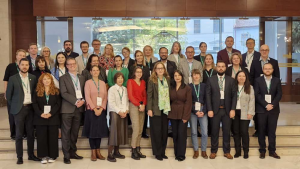
- The third meeting of the Thematic Peer Group C on Quality Assurance (TPG-C on QA) took place between 8–9 October 2025 in Brașov, Romania, bringing together national authorities, QA agencies and stakeholder to review progress on the Bologna Process commitments. The programme included findings from the National Action Plans 2024-2027, stakeholder engagement, Cross-Border QA (CBQA), synergies with European initiatives and the role of AI in higher education.
- SIQA has also finalised its first policy brief, prepared by Hcéres and CTI, dedicated to the external quality assurance of flexible learning pathways (FLPs). Based on a mapping of practices in 28 EHEA countries, the brief shows that most systems already include FLPs within their QA frameworks, though implementation remains uneven across specific areas. The document outlines targeted actions for ministries, QA agencies and higher education institutions.
- SIQA has now opened the first call for staff mobility programme. Through this scheme, TPG C members have the opportunity to engage directly with their peers, observe national QA practices on the ground, and exchange experience in a focused, hands-on setting. These visits are designed to strengthen mutual understanding, deepen cooperation, and support the enhancement-oriented implementation of the ESG across the EHEA. Members are warmly encouraged to apply, especially those interested in exploring new approaches, observing models from other systems, or sharing practices from their own context.